Acousmatic Lectures


Errant Sound

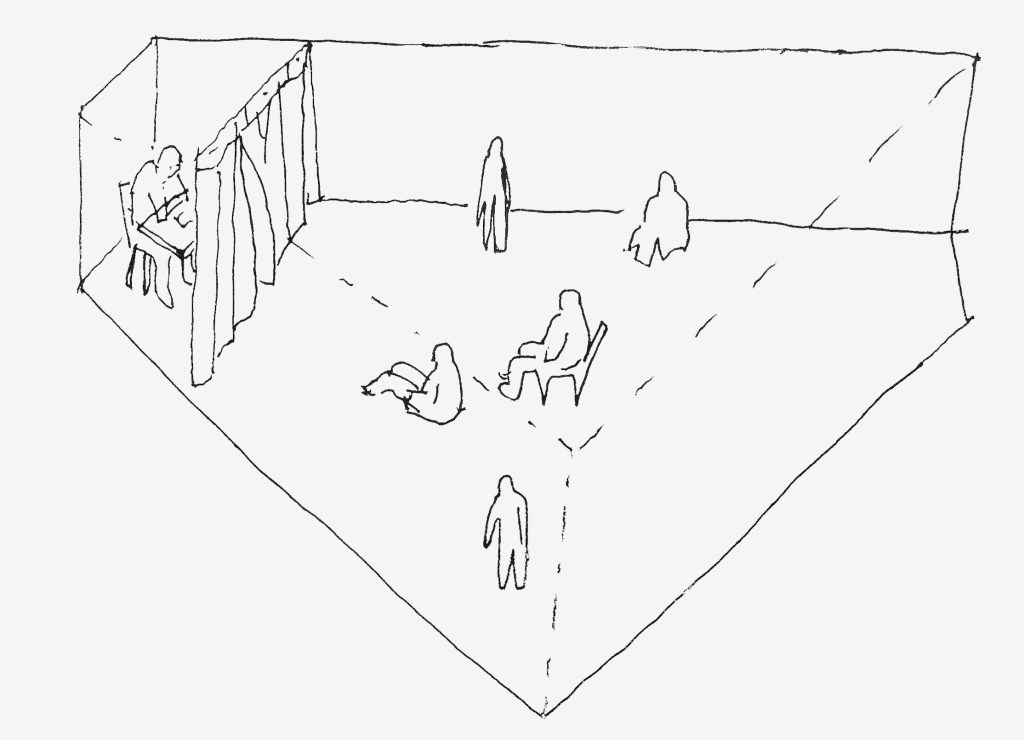
The Acousmatic Lectures are a laboratory for investigating phenomena that are directly related to voice and its research-based, artistic, and social dimensions. The Acousmatic Lectures have roots in discursive practices and propose a listening experience based on the Pythagorean acousmatic model: a mode of presentation in which the speaker is hidden from the public. The term references to a Pythagorean tradition according to which only Pythagorasโ€™s most devoted students were allowed to see and visually perceive him during his lectures (Mathematikoi). By contrast, newcomers were made to sit in front of a curtain concealing the masterโ€™s physiognomy. Students were therefore left without any visual information and had to try to follow the lectures solely by attentive listening (Akousmatikoi).

The Acousmatic Lectures are a laboratory for investigating phenomena directly related to acoustic information and its research-based, artistic, and socio-political dimensions. The conveyance of information between speaker and audience, as well as the surrounding context, is stripped of any extraneous visual aids and the setting is created by acoustic means aloneโ€”through speaking and listening. No technological amplification is used for the Acousmatic Lectures. In this way, the natural volume of the speakerโ€™s voice and its tonality are able to convey their physical presence more closely. Here, the voice is defined as an acoustic space that is capable of transmitting a wide variety of physical and affective communicational idiosyncrasies. The emphasis in these lectures is placed on the dialectical investigation of abstract linguistic information and on the voiceโ€™s own sensory acoustic information, confronting the audience with what is most central to this project: listening.

The speakers are academics and scholars who talk about their specific areas of expertise. The intention is to observe what impacts the acousmatic settings have on participants, and specifically without the influence of any other effects.

The aim is to develop a critical tool for listening and apprehension that can be used for artistic and/or analytical, research-based purposes. The Acousmatic Lecturesโ€™ simple but rigorous setting requires participants to summon all their possible auditory abilities to help define both the physical presence of the speaker and of the surrounding space. The lecture functions in part as a guiding element that describes the space acoustically, integrating the physical and spatial presence of the participants. As a result, the process of listening branches out into various directions, requiring one to constantly choose what to listen to (the properties of the voice in the particular space? The hum of the space in general? The shifting of bodies on my side of the curtain? My stomach growling?).
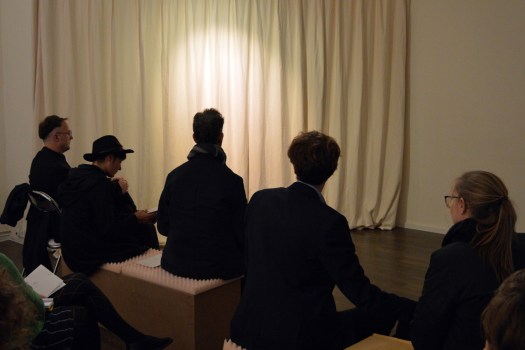
Acousmatic Lectures โ€“viewโ€“

The performative character of the Acousmatic Lectures condenses the classic academic lecture scenario into an acoustic experience that functions both informationally โ€“ on a linguistic level โ€“ as well as qualitatively โ€“ on the affective level of the voice โ€“ and is capable of transforming the situation, content, and space. These aspects are made legible through the ways in which the voiceโ€™s acoustic characteristics interact with the surrounding space. As such, the lectures might be experienced as a means for determining the interaction and transference of linguistic and affective sensory information. Already Iamblichus in the late 3rd century was aware of the active engagement within the Acousmatic situation: โ€The philosophy of the Acousmatics [akousmatikon philosophรญa] consists of oral instructions without demonstration and without argument: e.g., โ€œIn this way one must act.โ€ (Iamblichus 1975. chap. 18, ยง82)

We know little about the actual functions of Pythagorasโ€™s acousmatic veil, but we can experiment with the effects of the โ€œacousmatic curtain.โ€ If we consider the acousmatic curtain as a medium, we are able to ask: What kind of transformative function does it fulfil? How does it influence voice, language, and sound, or the relationship between the speaker and their surrounding space? And what is the Pythagorean curtain capable of today?

Lecturers:

Sven Spieker / Sabeth Buchmann / Federico Geller / Birgit Schneider / Hans-Jรถrg Rheinberger / Marcus Gammel / Markus Gabriel / Mladen Dolar / Alex Arteaga / a.o.

more infos >
https://acousmaticlectures.com/
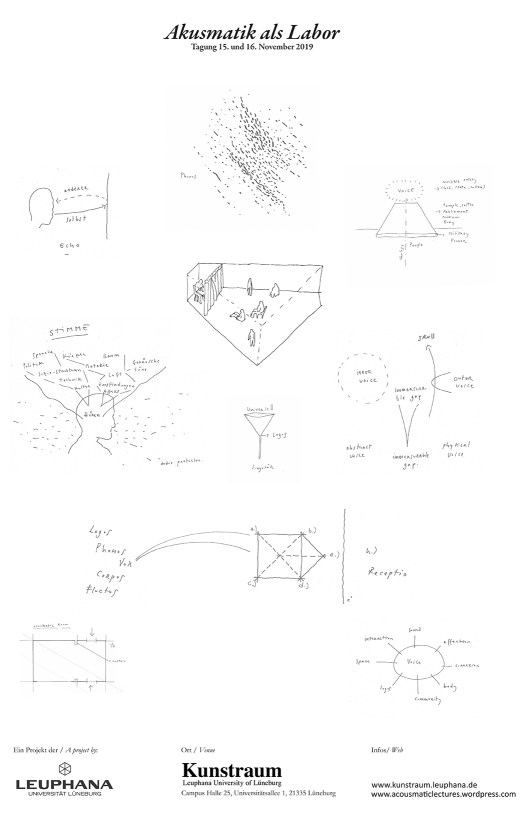
Poster symposium โ€“ Akusmatik als Labor

Publication

The book is conceived as a working tool that connects reflections on the topic with their media and spatial relevance. The layout of the book is intended to express the two sides of the curtain that separates the audience from the lecturers at Mario Asefโ€˜s Acousmatic Lectures. To the left and right of the text column, wide margins are left blank, which are meant to provide space for Asefโ€˜s drawings and diagrammatic interventions, but also for comments of the readers.
This creates a third narrative that runs parallel to the contributions of the authors gathered here.

Two fold-out, color double-pages in the middle of the volume show the curtain of the Acousmatic Lectures. Within this curtain we gather responses in English from selected participants of the series. Hans-Jรถrg Rheinberger (2017), Alex Arteaga (2017) and Mladen Dolar (2021) exemplify their experiences with their lectures in the context of Asefโ€˜s project.
Printed on the back of the curtain are two sound maps that refer specifically to the lectures of philosopher Markus Gabriel and Mladen Dolar. All contributions in this part of the book are provided with QR codes that allow online access to the corresponding Acousmatic Lectures.

Editors: Sven Spieker, Mario Asef 2023

Authors:
Alex Arteaga, Mario Asef, Johannes Block, Sabeth Buchmann, Mladen Dolar, Bernhard Dotzler, Wolfgang Ernst, Tim Hagemann, Bernd Harbeck-Pingel, Irene Lehmann, Jurij Muraลกov, Deniza Popova, Hans-Jรถrg Rheinberger, Sabine Sanio, Holger Schulze, Sven Spieker, Mai Wegener

more infos >

NEW BOOK RELEASE! Akusmatik als Labor: Kulturโ€“Kunstโ€“Medien
S. Spieker, M. Asef (Hrgs.). Verlag Kรถnighausen Neumann

Listen to the Acousmatic Lectures online!
visit the official page > http://www.acousmaticlectures.com

Interview fรผr w/k Zwischen Wissenschaft & Kunst – Online-Journal (German)
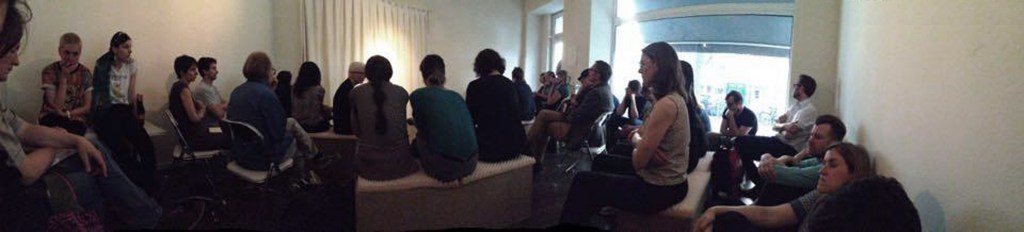
or download PDF here

Alex Arteaga, Acousmatic Lecture rehearsal 2017

What does a line think?

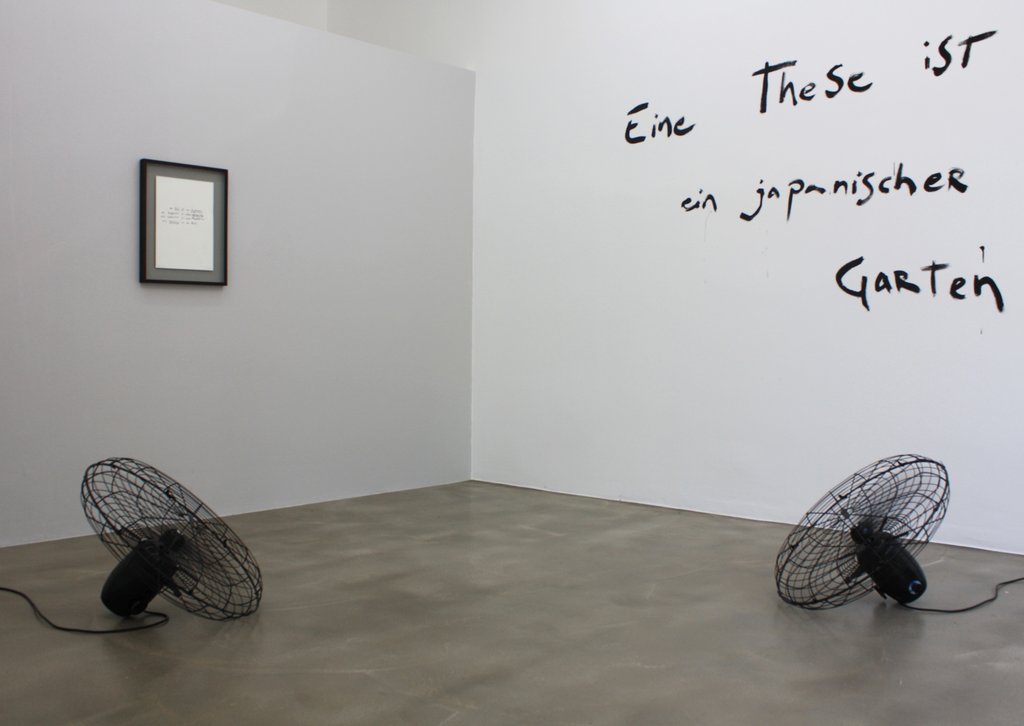
Statements – exhibition view Maniรจre Noire, Mario Asef ยฉ 2015

Language is not a welcoming land, as much as we tend to forget about it in daily communication. Reality is also not a welcoming machinery, though it seems that we have grown used to its rusty hinges. Mario Asefโ€™s work detains both language and reality (the cultural engine that produces it) with a minimal intervention that modifies their landscape. He respects the structural elements of language or cultural situations, he studies them. And then he introduces a slight modification that provokes a twist, a bristle that detains some elements of our cultural structure in an unexpected angle. Finally, he puts them back to roll into the structure, now affected and changed, and, most of all, exposed to our perception. The ground of facts is a spiderweb (Der Boden der Tatsachen ist ein Spinnennetz), we read in one of his statements, which could easily be understood under the logic of the aphorism. Common sense is a fragile territory, and our security cannot be anymore established in the ground of facts. Language also abandons part of its power here, and there is rarely a statement in Mario Asefโ€™s work that is not slightly touched, brought back from its bombastic character into a natural move. This is also a general trait of his work. Again, something is modified, and our perception and thought are affected, but this is done elegantly. A scarce or apparently casual line drawn there where you would not need it or expect it, can be enough sometimes. In Asefโ€™s pieces danger is not in tragic and dramatic exposures. It lies right before us, in a very small margin that has been taken out or changed.

A thesis is a Japanese Garden (Eine These ist ein japanischer Garden) says the writing on the opposite wall. It would actually be a relief to think that we can bring our walk through the garden to a memorable ending, the hill that offers us the harmonious view of our thoughts and actions. And we might need indeed a breath into this fragile (or solid sometimes) phantasy before going down back to the garden. This closeness and return to the material is a recurrent question in Asefโ€™s work. Be it a brick, a cake, debris, a lottery poster or the ink of words on the page, the materiality of thought is always perceived. Thus, there is never a two-dimensional experience, space, even in a small caress of volume is present. And this is especially striking in his statements, where language thinks (as it happens with the aphorism) within a very small margin of space and through very few elements. But the weight of the word on the white page (which could turn this kind of writing into visual poetry or slogans) is too much, it unbalances sensitivity. And there is where the line appears. It is never a decoration, and its relation to the words is not clearly stated. But it seems to have the function of bringing back language a little closer to its materiality, even to remind this inked decisions that there is a void around them. Casual, programatic, or even ironic or playful sometimes, the lines that appear in Asefโ€™s work create a relational tension that incorporates language but also goes beyond it. Those lines need to be handled with care, and cannot always be trusted. So the best thing we can do is to approach the ear, the eye, and ask them what are they thinking in there. For there will be no better clue to understand and enjoy the unbalanced garden they are part of.

Ernesto Estrella

Maniรจre Noire

โ€“

 The Author

Ernesto Estrella Cรณzar is an educator, poet, and musician born in Granada who  has lived in New York between 2000-2012. He completed his Ph.D. at Columbia University, and between 2007 and 2011 he was assistant professor of Contemporary Poetry at Yale Universityโ€™s Spanish and Portuguese department. Since the spring of 2012 he has turned to Berlin as a second base for his artistic and academic work. As a musician, he concentrates on the voiceโ€™s potential to explore the poetic process through sound. In this vein, he has created a wide array of performances that have been presented at international festivals in Argentina, Uruguay, Austria, Germany, Spain, Croatia, Russia, Finland, Latvia and the U.S.  Since his arrival to Berlin, he has been teaching seminars at Potsdam University. Moreover, in 2014 he launched The Voice Observatory, along with sound and conceptual artists Mario Asef and Brandon LaBelle. Funded by Berlinโ€™s Senate, this laboratory of investigation offers regular seminars, workshops and performances related to the voice in its acoustic, communicative, performative, and socio-political dimensions. Most recently, his work in cultural management and civic education has led to the creation of the Nomadic School of the Senses.

Translocations

Susanne Kรถhler

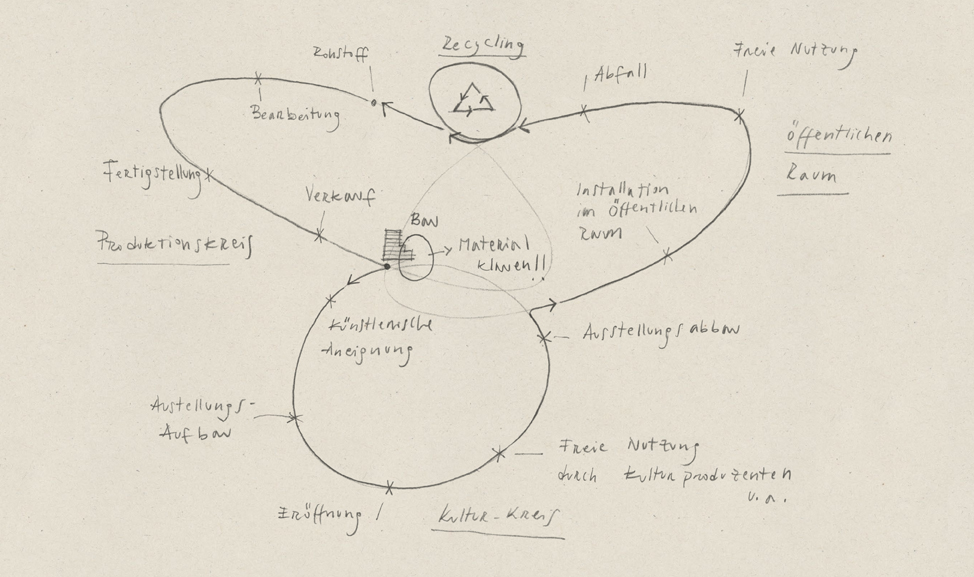
Raumprothesen – Diagram, Mario Asef ยฉ 2012

Urban space and its appropriation by the people who use it is the source of Mario Asefโ€™s artistic work. In his videos, photographs, sound installations, and interventions the artist deals with architectonic as well as socio-political discourse and investigates how they are represented spatially. Like a researcher he examines the constructions of public life by working against the dominant order in subtle ways. This occurs by reordering things without notice or by removing elements specific to the location and adapting them to the art context. Accordingly, these urban objects are first apprehended as artworks when they are documented in photographs or written about in texts.

Asefโ€™s group of works Empirien (1998-2006) presents an entire series of interventions documented in this way. For instance, in the work Fragileโ€”handle with care/appropriation (2004), the artist placed cardboard boxes in front of the Covent Garden Theater Museum in London, which were then taken over by individuals and used as sleeping spots. By converting packaging into housing, Asef indirectly draws attention to the negative spaces of the city, which make life (survival) possible, but also to the present absence of the homeless. Like illegal immigrants or street musicians, the homeless also count among theโ€”for the most partโ€”undesirable users of public space.1 The artist stages this situation like an experiment. That vagrants then make use of it in practical ways undermines the efforts of local authorities.

In and of themselves the unforeseen and the ephemeral are inherent to Mario Asefโ€™s interventions. He never knows how long his rearrangements will last or whether or how passersby will take them over and put them to use. This participation is the trigger for a non-verbal communication outside of cultural institutions. For the most part the users of the locations involved quickly grasp the initiative, deconstruct the intervention, and reestablish the usual โ€œnormal orderโ€ of things.

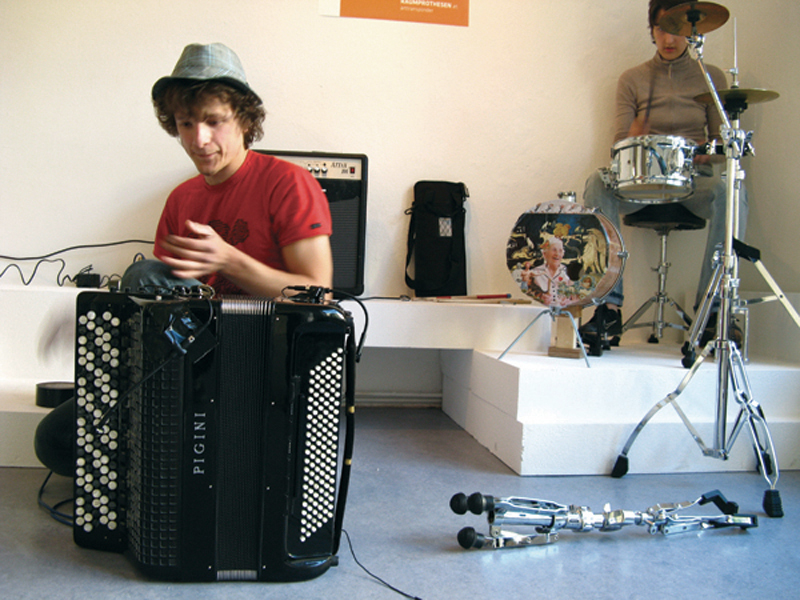
Raumprothesen (spatial prosthetics) can be viewed in many respects as a further development of this creative process. In this case, urban phenomena are actually translocated into the art establishment. Here Asef manifests his socio-critical stance by inviting street musicians to play at his opening. The performative evening was consciously designed to provoke interaction between the art-going public and individuals who operate primarily within the urban locations outside of cultural institutions.

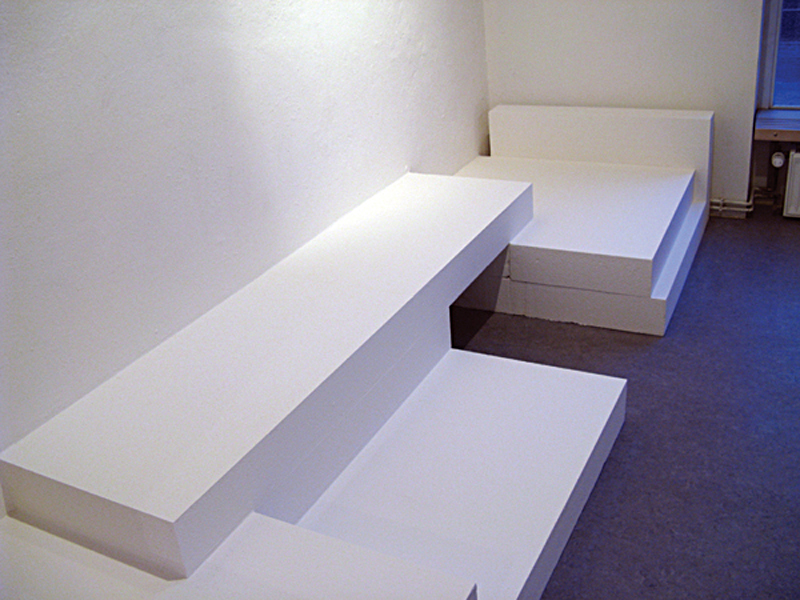
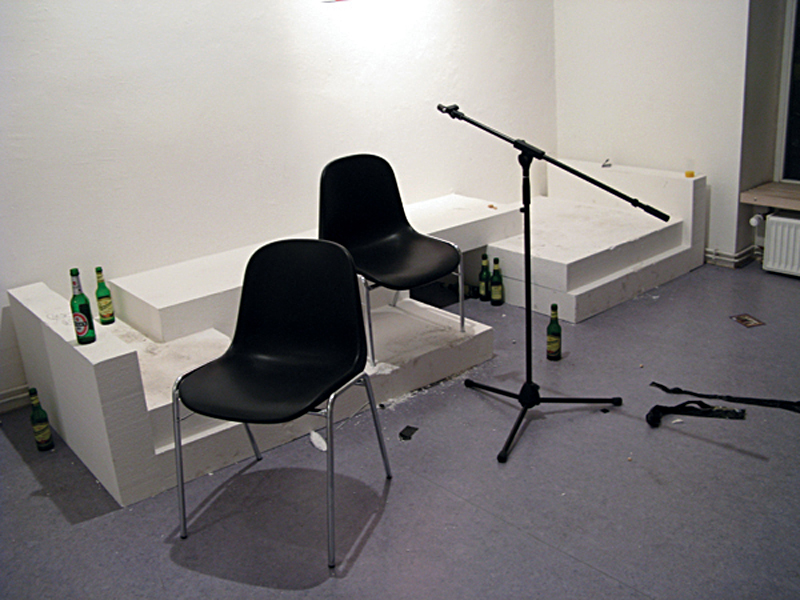
In contrast to Empirien, the participation of everyone involved takes place within the exhibition space. As a result of this appropriation beer bottles, cigarette butts, and trash pile up on the floor and imprints from fingers and people sitting are pressed into the sculptural elementsโ€”the โ€œRaumprothesenโ€โ€”that the artist has integrated into the exhibition. โ€œProtheseโ€ (prosthetics) means here, so to speak, the artificial extension of the room that fulfills a specific function. As such the objects donโ€™t even stand out at first. Rather, their white color and inconspicuous positioning on the margins allows them to be seen as a fixed component of the exhibition space.

A central aspect of this work involves returning the purported sculptures to the public locations where the elements that inspired them formally are found. For his work Asef initially pilfers material from the city. In this case polystyrene insulation board for acoustically isolating homes is used. In the context of his exhibition this building material is transformed into sculptures. Through their use (disintegration), mostly by the musicians to whom the sculptural elements were assigned as stages, they are, in turn, viewed as everyday objects. Throughout the entire duration of the show the viewer can observe the process of using the space along with its Prothesen. In addition the brief musical performances have been captured in a documentary video as staged memory, and are continuously on view. Here the quality of the recording plays a secondary role. Asef films more like an anthropologist who attempts to understand the circumstances from a distance. After the presentation in the art context is over, the objects and musicians alike make their way back onto the streets. Once there, people will again use the โ€œRaumprothesenโ€ as seating and eventually dispose of them. With this, a cycle of varying translocations and ascribing of meanings apparently comes to its end.

Whether in urban public space or within the space of an exhibition, the experience of those involved in Mario Asefโ€™s interventions go far beyond the actual participation. Rather, through his subtle interventions, the viewer is sensitized to the processes at work in urban, social surroundings.


1 Asefโ€™s socio-critical stance goes back to the artistโ€™s own personal experiences. He himself migrated from Argentina to Germany twelve years ago.

The Author

Susanne Trasberger (formerly Kรถhler)ย studied cultural sciences and aesthetics at the University of Hildesheim. She curated several exhibitions in Berlin (e.g. NGBK), Worpswede and at the Kunstmuseum Wolfsburg. She was director of Kunstverein Junge Kunst, Wolfsburg, production manager for theย exhibitionย XIII. Rohkunstbauย in Berlin and published various art catalogues. She currently lives in Berlin and works for Texte zur Kunst.

See also books >

Shifting the Focus

Fiona McGovern

Raumprothesen – Mario Asef ยฉ 2009

The opening of Mario Asefโ€™s exhibition Raumprothesen fรผr frei zusammenwachsende Sozialorganismen (Spatial Prosthetics for Freely Integrated Social Organisms) at arttransponder was a big celebration. As announced on posters in the exhibition space, various Berlin-based street musicians, invited by the artist, played one after the other. The musicians hailed from northwest Africa, Turkey, and Russia, and also included a World Music DJ from Argentina. Toward the end of the night the musicians spontaneously improvised together. For viewers the gallery visit became a musical journey through world cultures whose sounds and voices became increasingly mixed over the course of the evening. At first the musical event seemed to be the focus here, however, during the remainder of the exhibition the essential conditions and multi-layered referential structures of the project became evident.

Raumprothesen – Mario Asef ยฉ 2009

The โ€œRaumprothesen,โ€ which give the exhibition its name, served as individual stages for the musicians. Made out of insulation board, the abstract geometrical shapes in the form of ledges and steps inconspicuously extended the stark architecture of the White Cube into the space. While the artist-designed objects that add to the existing architecture are certainly a focus of the exhibition, their designing points more significantly to a symbolic shifting of the categorization-defying architectonic remainsโ€”which Mario Asef groups under the neologism โ€œRaumprothesenโ€โ€”from the realm of urban public space to the (institutional) art context. In the sense of the dualism of Site (here: public space) and Nonsite (here: gallery room), once formulated by Robert Smithson, a kind of displacement also occurs here that changes our perceptions. Both of Smithsonโ€™s terms also explicitly refer to their respective phonetic equivalents of Sight and Nonsight: what consciously enters our field of vision first affects us and holds our attention. Shifting the Raumprothesen from urban space to the gallery space leads therefore not only to a revaluation of these elements, which are completely neglectedโ€”if not repressedโ€”by city planners and architects, but generates literally and figuratively a platform for street musicians. In oneโ€™s perception of public space, illegal immigrants areโ€”like some of the participating musiciansโ€”often degraded to objects that seemingly belong to the cityscape. Shifting the location of the musicians also signifies for them, in analogy to the Raumprothesen, a revaluation of their musical playing and their recognition as subjects of our society. If insulation board typically functions to isolate rooms acoustically, the voices of immigrants are now the focus of attention on top of them.

Raumprothesen – Mario Asef ยฉ 2009

This new form of public appearance didnโ€™t seem to put all of the invited guests at ease; the fact that the Romanian musicians didnโ€™t even show up for the opening night might be an indication of the explosiveness that goes along with this shift. The White Cube as an exclusive space closed off from the outside world becomes itself a far more open platform here; the borders between the experience of art and the urban everyday are permeable. Thus everything that transpires in the exhibition space also always points to its external reality. At the same time remnants from the opening night, such as scattered beer bottles or candy wrappers, become a part of the work as much as they are an index of a prior and potentially missed event. These can be appreciated during the concert-free period with a video from the opening celebration that plays on a small monitor in a corner of the room. Via this shift in medium a direct relationship is made to the video work Violinparis (2007)โ€”presented at the same time in the exhibitionโ€”whose symbolism forms the point of departure and the basis of the questions being addressed here: with very little concern for technical effects and no subsequent editing, Violinparis presents the portrait of a Parisian street musician who plays her Turkish Rebec undisturbed and uninterrupted in front of the Centre Georges Pompidou while museum workers busily measure the square around her without paying her any attention. Over the years she has, as a matter of course, become a fixed element of the square, the sound of her instrument has become the constant soundtrack to local events. If, at best, she makes waiting in line for the Centre Georges Pompidou easier to deal with as a result of her playing, then in an exhibition context she is granted a presence and recognition that she hardly ever benefits from in everyday lifeโ€”even if, or precisely because, a surprising number of visitors remember her from their visits to Paris.

Raumprothesen – Mario Asef ยฉ 2009

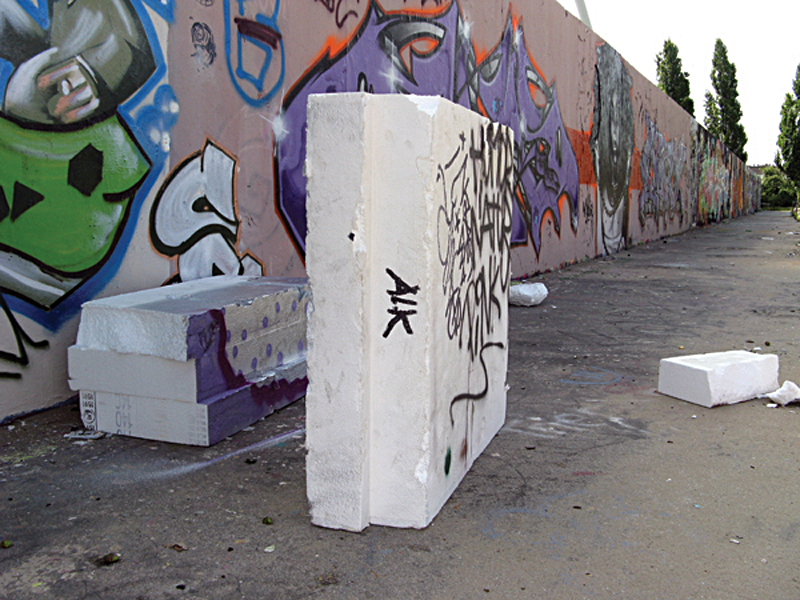
In a final action at the end of the exhibition, Mario Asef converts the here-mentioned shifts into a circular flow, thus turning the previously ideal repercussion of this project on external space into a material. As an art object, but mainly as prototypes of architectonic blank spaces, he places the slowly disintegrating insulation board-constructions in central locations around Berlin such as Potsdamer Platz, Alexanderplatz, and Mauerpark, reintegrating them (back) into urban space. They become a part of skateboard ramps, incorporated into graffiti, or used for seating. Now itโ€™s only a question of time how long the impermanent material can hold its own ground.

Via this intermingling of two distinct spaces, each with their own inherent social customs and unspoken rules, Mario Asefโ€™s exhibition project Raumprothesen fรผr frei zusammenwachsende Sozialorganismen ultimately becomes itself a test case for urban development. A test case that demands a new way of looking at our architectonic surroundings and social interactionsโ€”both in the urban environment as well as the exhibition space.

Raumprothesen – Mario Asef ยฉ 2009

The Author

Fiona Mc Govern studied art history and comparative literature in Gรถttingn and Berlin. Since Spring 2009 she is a research associate at the collaborative research centre Aesthetic Experience and the Dissolution of Artistic Limits, Freie Universitรคt Berlin and works on the adaption of curatorial approaches by artists since the late 1960โ€™s.