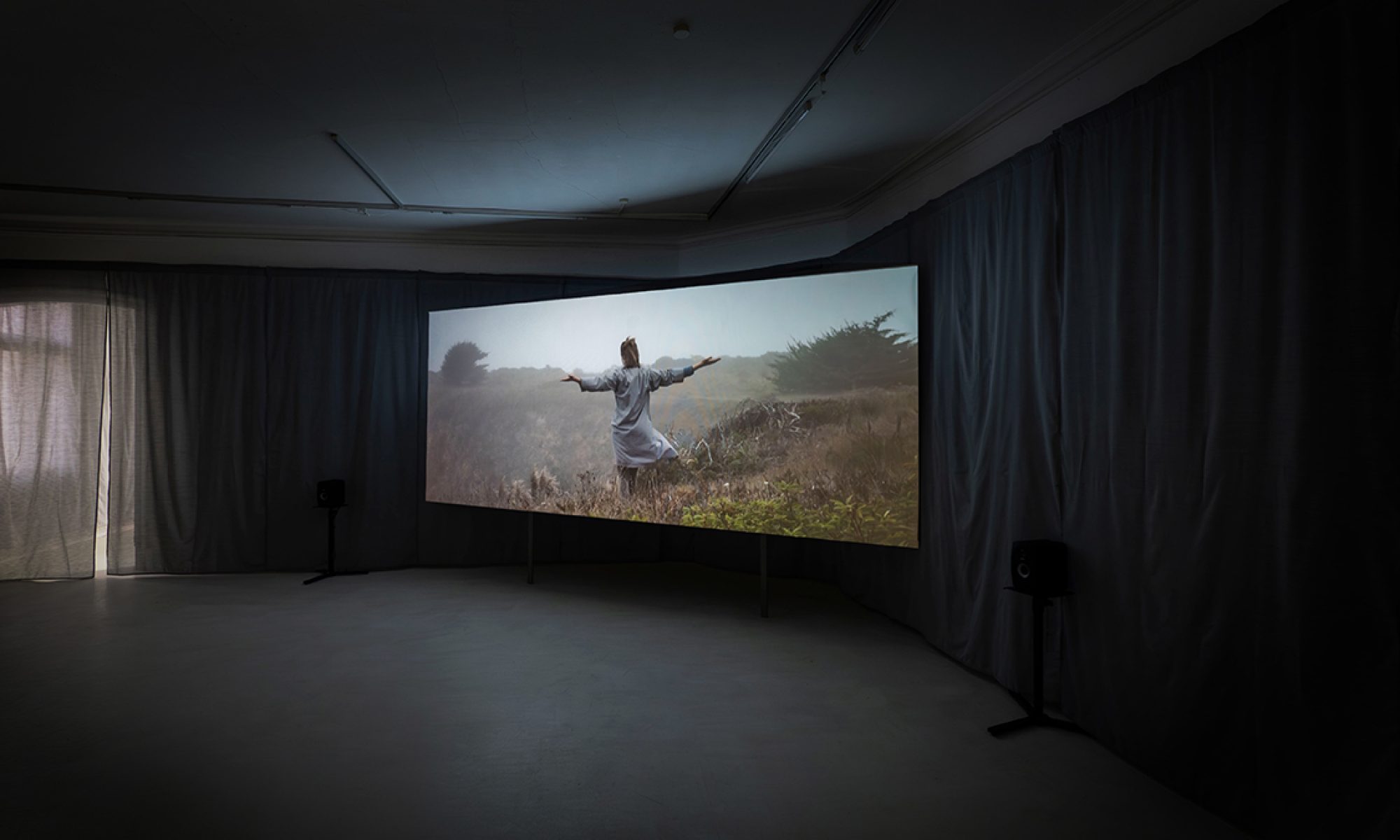
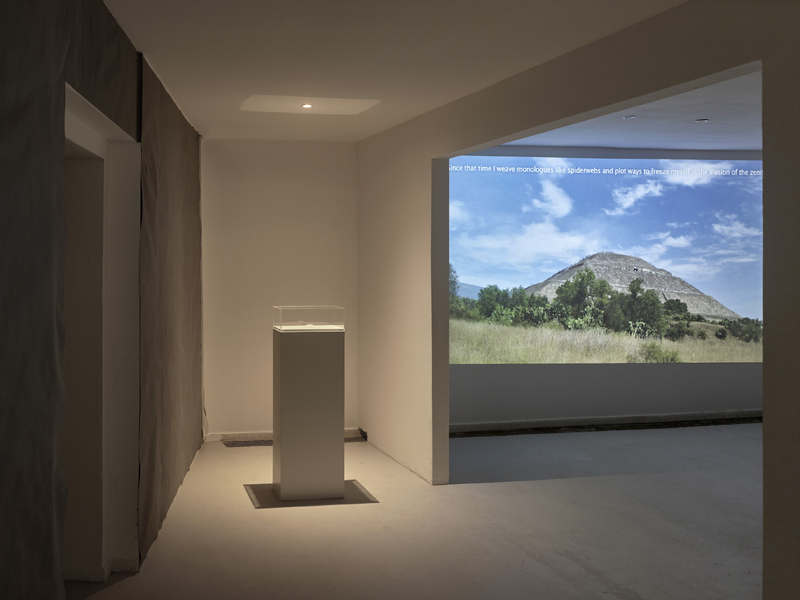
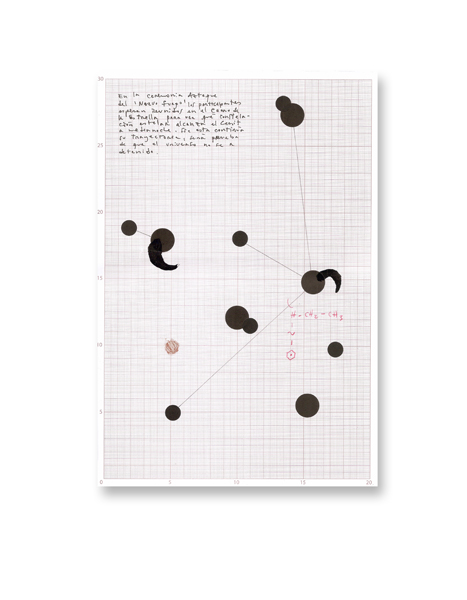
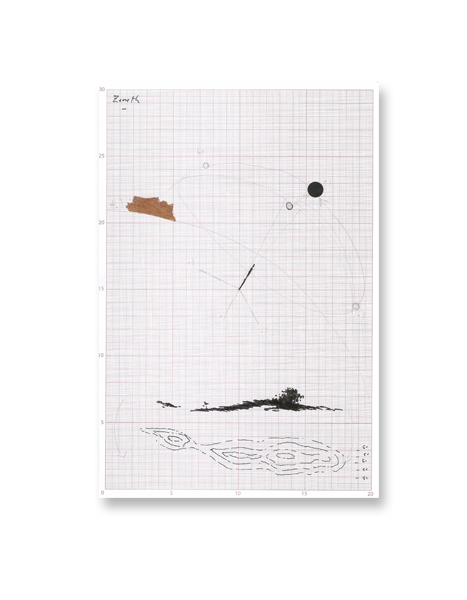
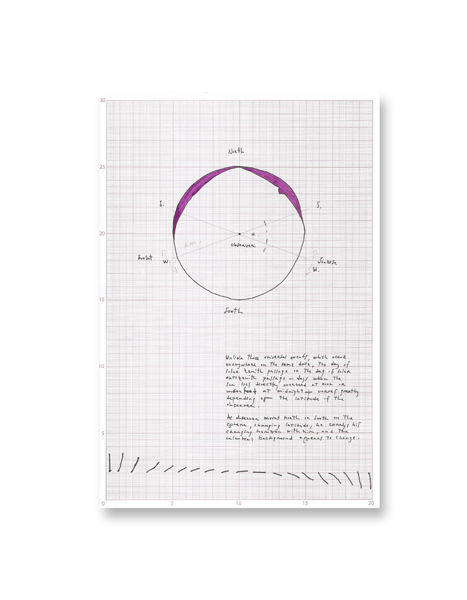
The video Cenit tells a love story that is a metaphor for the celestial moment when the sun casts no shadow. Spinoza’s Ethics and an archaeological examination of Aztec ruins serve as the point of departure for a theory of reality and emotions. In Asef’s view, reconstructing and representing real space in the mind draws on the same mental processes used for constructing the idea of love and happiness. Accordingly, wandering the earth induces an emotional experience that prompts the main character of Cenit to search for the geographical point of happiness.
The work was presented in 2018 at The Drawing Hub Berlin, Germany / Griffin Art Projects, Vancouver, Canada and Wildpalms, Düsseldorf, Germany.
single screen projection / duration: 11’ 54’’ min / system: HD Pal – Color / audio: Stereo Digital
Exhibition images by Achim Kukulies and Mario Asef
—
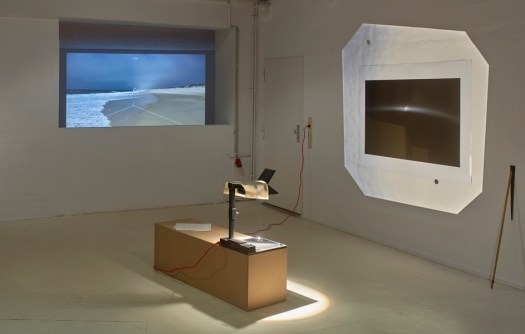
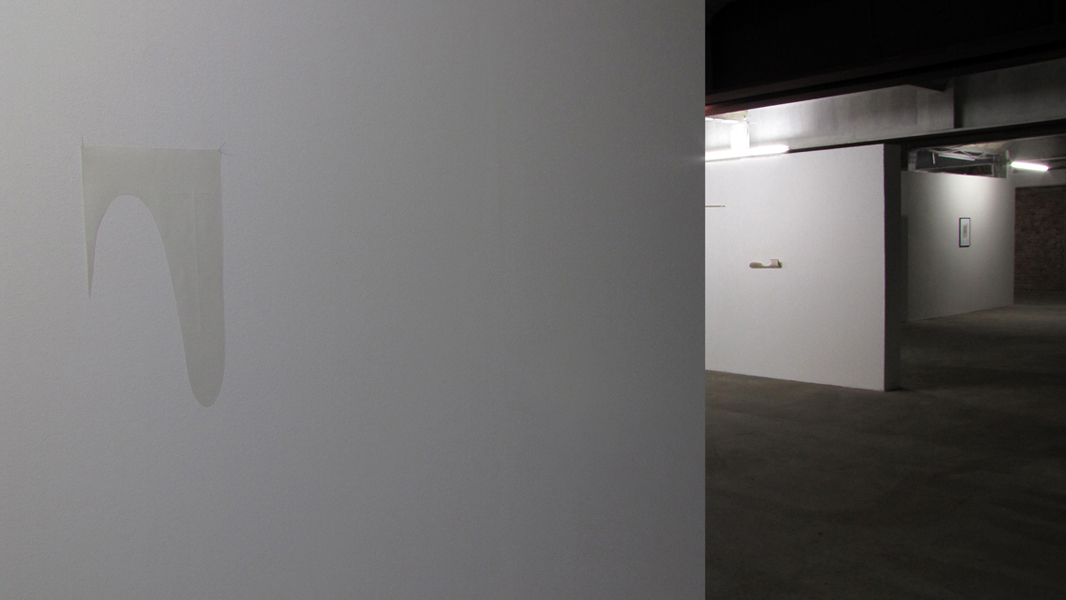
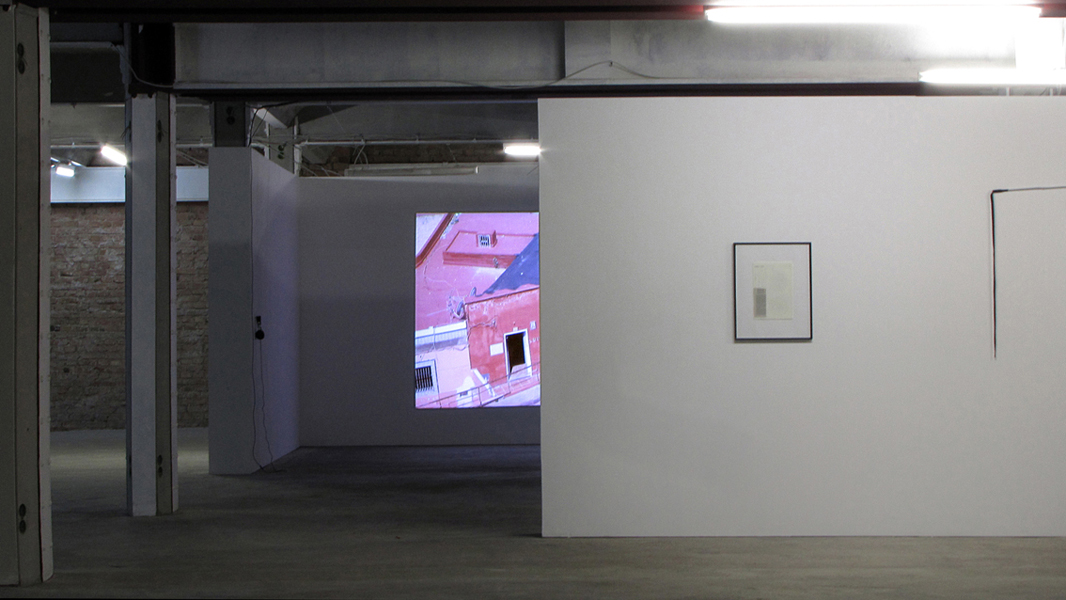
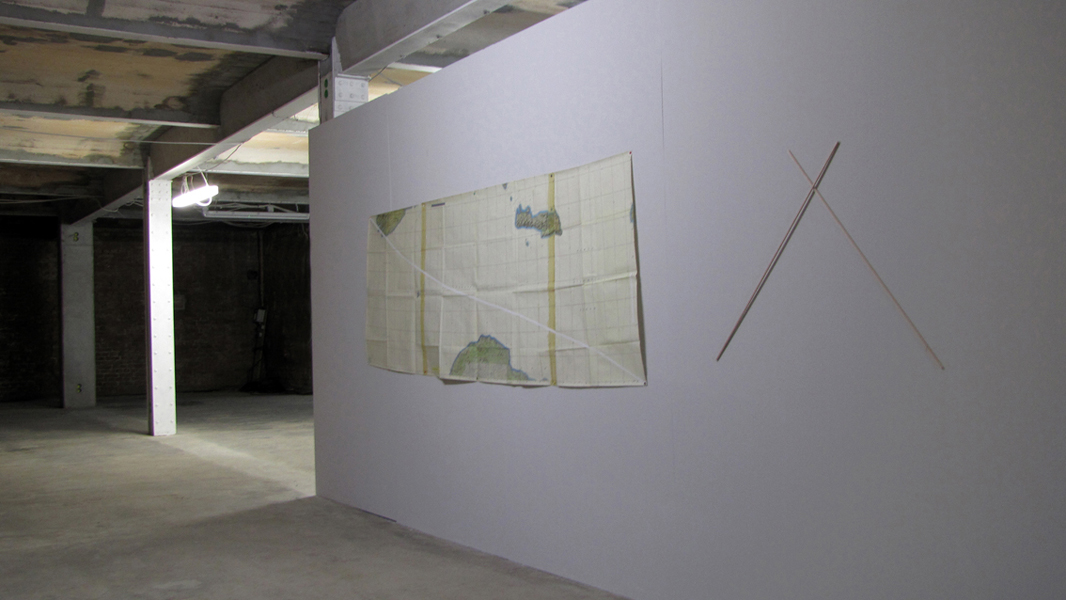
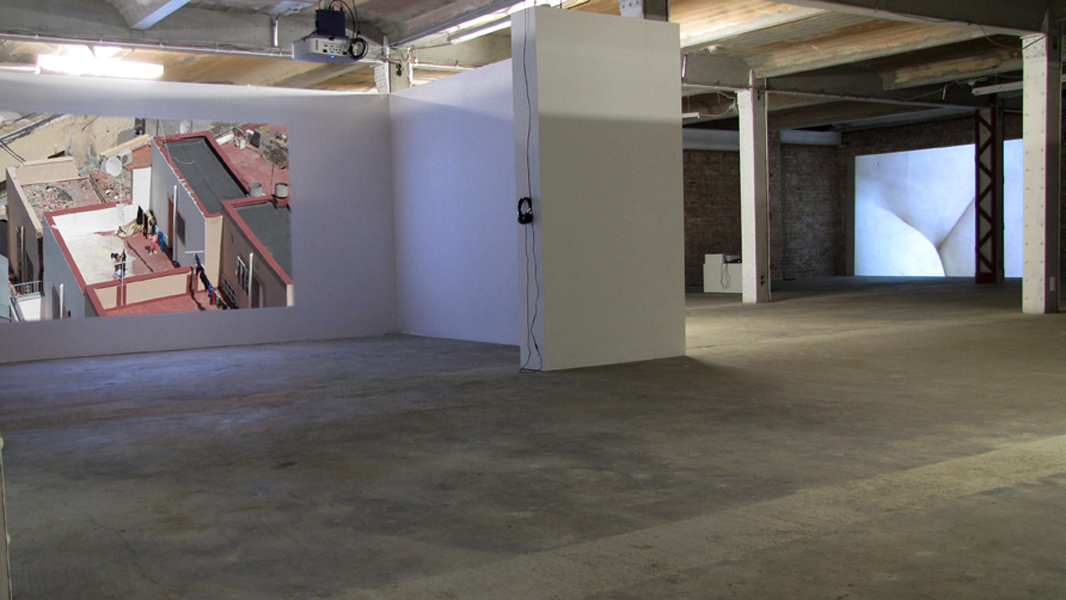
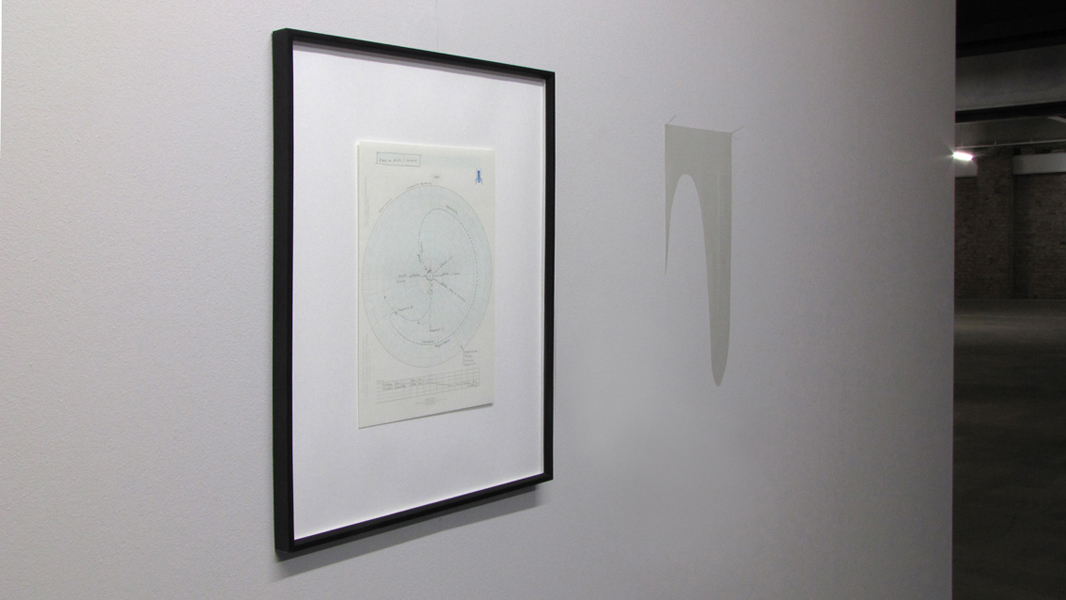
Cenit –installatoin view, wild palms, DüsseldorfCenit –installatoin view, wild palms, DüsseldorfCenit –installatoin view, The Drawing Hub, BerlinCenit –installatoin view, wild palms, DüsseldorfCenit –installatoin view, The Drawing Hub, BerlinCenit –drawing, mix media on millimetre paperCenit –drawing, mix media on millimetre paperCenit –drawing, mix media on millimetre paperCenit –video still–Cenit –video still–Cenit –video still–
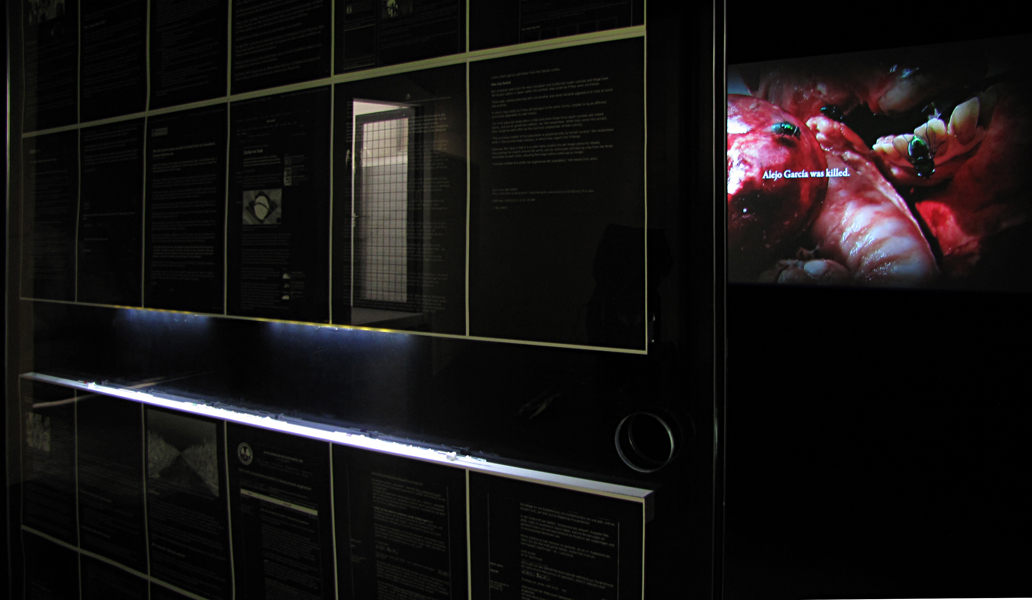
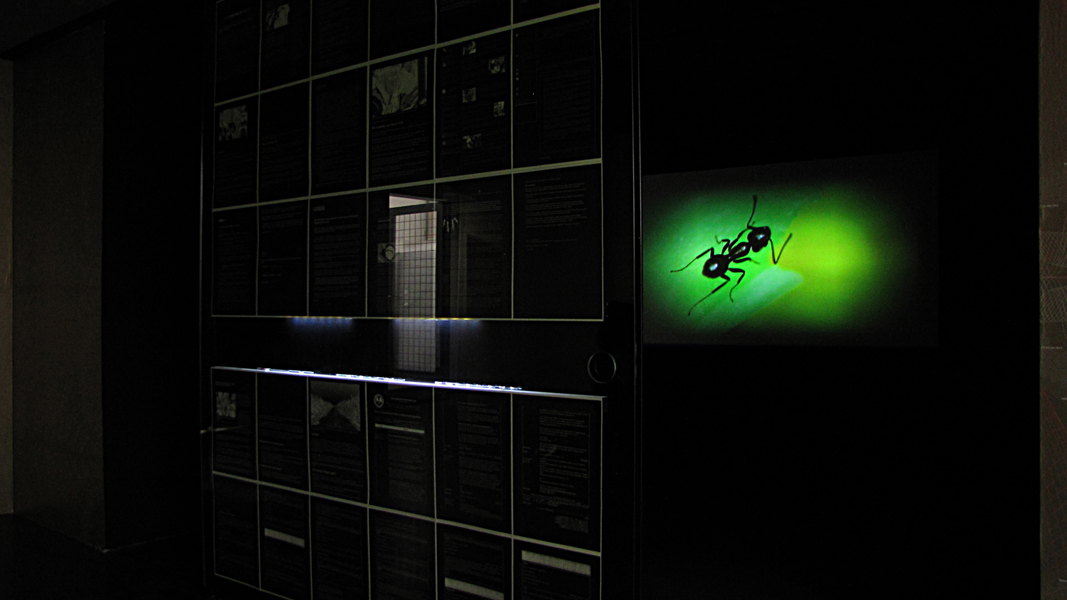
The video work Crossfade focuses on two types of mass migration between South America and Europe, comparing the process of population expansion in human beings with the expansion dynamics of populations in nature.
The arrival of Europeans in the Americas was an event that would irrevocably change the course of history of mankind. By the time the first explorers had landed, an invasion of the continent had already become inevitable. For sixteenth century Europeans, America became a screen onto which they could project their fantasies of discovering a new Eden. Many of them lost their lives in pursuit of this illusion, while many Native Americans lost theirs in a struggle to defend their way of life. One man’s dream is another man’s nightmare.
In the early twentieth century, the accidental arrival of a species of ant in Europe drastically modified the coastal environment of the European Mediterranean. Shiploads of Argentinean grain, sugar and wood exported to Europe brought with them the species Linepithema Humile, also known as the Argentine ant. This ant is notorious not only for its exceptional reproductive capacity, but also as an invader that kills and enslaves other native species. From Genoa to the Atlantic coast of Portugal, a stretch of nearly 5,600 kilometres along the Mediterranean coast, there exists a super-colony of Argentine ants.
Crossfade –video still–
duration: 6’ 30’’ min and 16′ 30” min / system: HD Pal – Color / audio: Stereo Digital
The work has been presented at Junge Kunst e.V. Wolfsburg, Germany in 2012, at Q21, MuseumsQuartier Vienna, Austria 2014, different galleries in London, Berlin and Vienna as well as the Daegu Photo Biennale 2018, South Korea.
The video installation, “Three Anachronisms,” is a trilogy produced between 2010 and 2014 by Mario Asef, in which the artist reflects on three aspects of the constitution of reality. 1. The appropriation and structure of space. 2. The construction of time. 3. The relationship among information, nature and culture. This trilogy, however, is not a philosophical treatise showing the functioning of these categories. Rather, the reality that Asef observes is constituted by deficiencies in three different orders: paradox, coincidence and failure.The urge to wonder about reality occurs in advance, in the formal aspects of the work. Similar to a documentary, Asef dispenses with the staging. The facts are distant so that the artist can modify them directly. The fixed camera and the presence of common places (the terrace, the museum, the plaza), confirm that here the camera is negotiating with what is put in charge without preamble. The presence of a theoretical body, which is the basis for his work, the constant readings of sociological, philosophical and archaeological theories, construct the objectivist building from which Asef casts on reality.
The exhibit’s title reveals that the work is composed of three parts and in turn indicates how the parts relate to each other. Although the three videos were produced over a continuous period of time, the relationship among them is neither temporal nor spatial. Like a medieval altar with its wings unfurled, where each part of the triptych represents different events occurring in different spaces and times, building a narrative that links different events, so do Asef’s videos present singular facts. On the whole, however, the trilogy builds a representation of the events of Asef’s research (social reality as a construct). The variety of approaches, contexts and reflections come to change and destabilize reality itself, exposing its shortcomings.
However, Asef demonstrates, this building is full of cracks and at risk of collapse: reality and objectivity come to be refuted from the realm of words. With the use of language, Asef separates the image from his documentary content and purpose. In each of the videos, the text does not run as a subtitle, but as the title, positioned in the center of the image itself, breaking the hegemony, enthroned in the middle of our field of vision.
While the use of textual-visuals make the ground of the building tremble, irony – an important feature in Asef’s work – completely destroys this building. Heir to the Argentine literary tradition, where the derision on reality allows hyper-real worlds to open that never stop reproducing themselves (Cortazar and Borges), Asef destabilizes images, concepts and categories with which we build the platforms to travel reality. To provoke laughter, Asef allows us to enter a new order of the visual and begin to think the unthinkable.
Mario Asef’s first studio visit with Node’s resident curators was, for me, one of the most motivating moments of these ultimate months. It was the last studio visit of a long rainy Berlin day. The eight of us were exhausted and immediately ‘occupied’ the green carpet of Mario’s studio. What could have been an awkward meeting (because of our tiredness), instantly turned into an extraordinarily appealing talk. Every piece of work he showed us led to a conversation about several topics, sometimes related to art, sometimes to philosophy, politics or social relations. When the visit finished most of us felt the need to somehow try to work with him. We wanted “more Asef”.
For Faraway, So Close! we selected three pieces from Mario Asef’s video series History is now: Börsianer/The Operators, Man’s on Moon, and Revolution after Revolution.
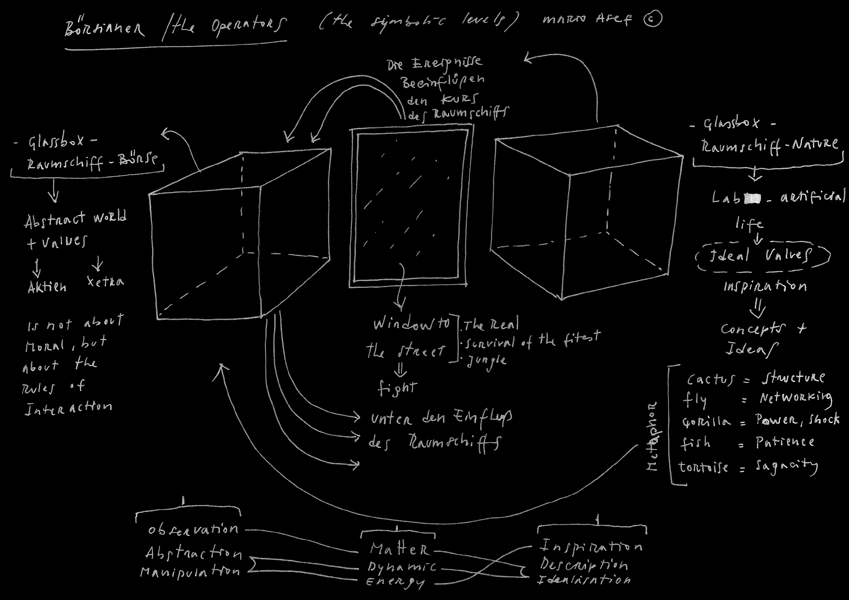
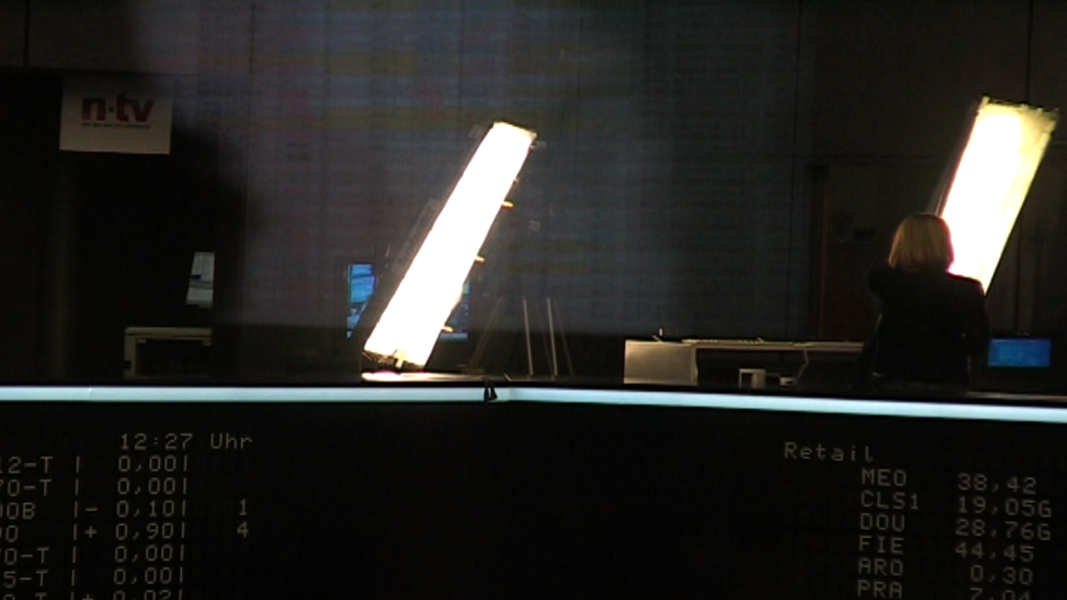
In his videos, Asef brings us back to the concept of intra-history, introduced in 1895 by the Spanish philosopher Miguel de Unamuno in his book En torno al casticismo or to the most recent vision of micro-history by the Italian Carlo Ginzburg. For Asef, history should be interested in the routes whose principle leading roles are played by its peripheral actors; that is to say, the paths followed by those men who make history in an unconscious manner, by those who do not aspire to the title of heroes. The historical event is not the monumental fresco that encourages the mythification of politicians, military men and priests, the traditional heroes of history… Mario Asef decodes these concepts, recovering “micro-historical moments” (as he points out) in order to reveal the present as historically significant. Börsianer/The Operators juxtaposes the apparently sterile composure of the Frankfurt Stock Exchange with the life of homeless people from the suburbs of the city. What at first sight could be regarded as two antagonistic worlds become the two sides of the same instinct of survival. Abstract values versus reality? Civilized world versus wilderness? Every downturn of the financial market becomes crucial to our lives, as nature is experienced as an all-embracing fact and dictator of reality… like the bucolic backdrop shown through the glass of an aquarium.
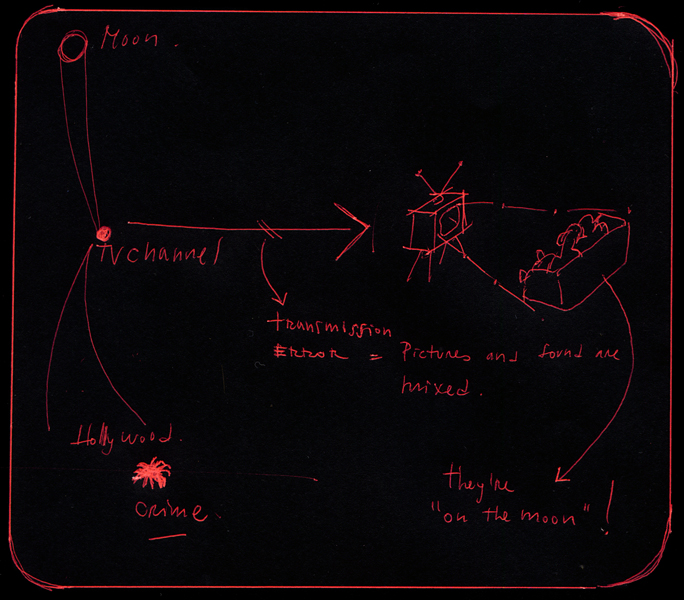
Man’s on Moon looks back to 1969, when Commander Neil Armstrong became the first man on the moon. This scene, broadcasted to every television of the Western world, incarnated the faith of our civilization in technology and science during the Cold War era. In the same year, one of the most feared serial killers of America, Charles Manson, was arrested. His arrest marked the milestone of the end of the hippie-era, the end of Martin Luther King’s dream… In Man’s on Moon, Asef cuts together sequences from the Apollo 17 Mission and audio extracts from Charles Manson interviews, reflecting on the social dynamics that lead to an ontological discussion of truth and reality.
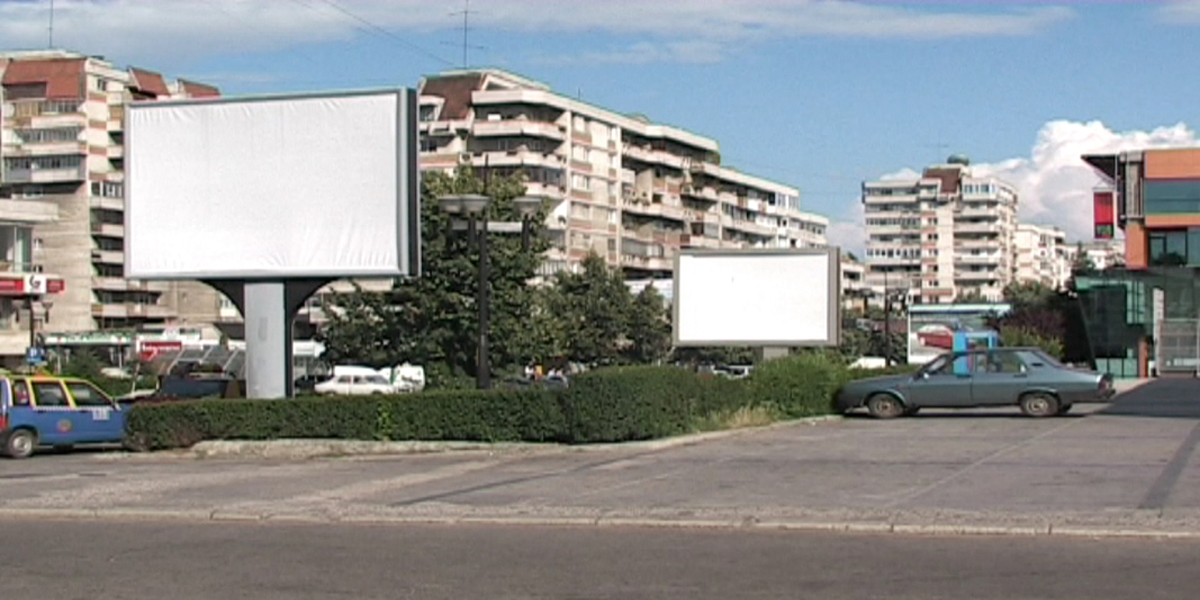
In the words of Asef, “when a staged revolution is part of a country’s historical reality it shapes the direction of everyday life”. Filmed in three Romanian towns (Sibiu, Pitesti and Bucharest), Revolution after Revolution examines how advertising strategies of the post-Communist era are digested as part of Romanians’ everyday lives. The modern architecture of the sixties and its dead ideology forms the background where citizens become actors (or heroes?) and revolution turns into allegory.
“We are not content with negative obedience, nor even with the most abject submission. When finally you surrender to us, it must be of your own free will. We do not destroy the heretic because he resists us; so long as he resists us we never destroy him. We convert him, we capture his inner mind, we reshape him. We burn all evil and all illusion out of him; we bring him over to our side, not in appearance, but genuinely, heart and soul. We make him one of ourselves before we kill him. It is intolerable to us that an erroneous thought should exist anywhere in the world, however secret and powerless it may be. Even in the instance of death we cannot permit any deviation… we make the brain perfect before we blow it out.” George Orwell, 1984
Priorities seem clear: first learn, then understand, and finally accept. The whole purpose here is not repetitive or blind obedience but disciplined and controlled minds… George Orwell could not anticipate the economic globalization and the sophistication of information technology in the Western world, but he formed the basis for understanding some of the most serious problems we face today.
Living in a contemporary world means to be surrounded by a multiplicity of electronic devices that gradually shape new borders of our personality. We expand and consider our private space to be inside our iPhones, computers and mailboxes. This unreal and imaginary possession of information can lead to manipulations, performed not only at an individual level. In particular, the lack of corporate and governmental transparency has been a topic of much controversy in recent years, yet the only tool for encouraging greater openness is the slow, tedious process of policy reform.
The Transparency Grenade by Julian Oliver for Studio Weise 7 was the central pivot on which the exhibition in the Fichte-Bunker turned around. It represented two actions: firstly, the invention and construction of an electronic device, and secondly, a situation. The Grenade itself was a replica of Soviet F1 Hand Grenade with a different mechanism of destruction, equipped with a tiny computer, microphone and powerful wireless antenna. It was also a situation, because it made the viewer directly responsible for pulling the ripcord to detonate the Grenade in order to unmask the decision-making processes of any corporate or Governmental Institution. Email fragments, HTML pages, images will be revealed, reminding the occasional user of his weaknesses and strengths. As stated by Michel Foucault, the individual is a part of the power structure’s cogs and secures it with his own attitudes and behaviors. However, and it may seem contradictory, this power (as read in George Orwell’s1984) is omnipresent and omniscient, a power that is constantly being apprehended, but which never answers. State institutions are mechanisms that seem to obey their own laws and rules, they are bureaucratic labyrinths completely unknown by us. Thus, we find depersonalized individuals facing an apparatus against which there is no way to oppose. Numerous references were forwarded about this in Faraway, So Close! by Argentinean artist Mario Asef, especially in the video piece Börsianer / The Operators, which juxtaposed the apparently sterile composure of the Frankfurt Stock Exchange with the life of homeless people from the suburbs of the city. What at first sight could be regarded as two antithetical worlds became the two sides of the same reality. Every downturn of the financial markets becomes crucial in our own lives…
The viewer inside the Fichte-Bunker was confronted with a dystopic reality, a world not desirable, but conceivable. John Stuart Mill coined in the last years of the nineteenth century the term “dystopia” to refer to an unwanted society, opposed to utopia. Mill described an oppressive and closed-on-itself society, usually under an authoritarian government, but presented to its citizens as a utopia. George Orwell’s 1984 was one of the most refined examples of dystopia. It insisted, in a very persuasive way, on the power of technology as a basic tool for social control and the end of privacy. Orwell portrayed a society that to survive, created a perverse, permanent monitoring system from which originated an increasingly imperceptible but ever-present control, a subtle and not clearly coercive method that left citizens with the permanent doubt of whether they were being watched. It is through the uncertainty of not knowing how to maintain the subordination of being under surveillance, through a large and always-on screen, receiving and transmitting information, that individuals were handcuffed by their actions. All this, centralized by the everpresent Ministry of Truth, which was a pyramidal structure of white concrete over three hundred meters high. The Ministry of Truth acted as a vast Jeremy Bentham style panopticon that distinguished, watched and controlled all of what happened in that society.
According to Zygmunt Bauman, uncertainty about the future, the fragility of our social position and the anxiety of our own existence are persistent elements of our society. Therefore, one of the basic actions of human beings has been to preserve the order and to ensure its durability from incursions coming from the outside: an “outside” characterized by disorder and insecurity; an exterior that, in each historical moment has had different characteristics and traits, but always an enemy, an enemy that has always been the “other”. Against this “other”, that represents the fragility and the precariousness of daily life, all societies have been provided with multiple defensive tricks and tools that allow us to preserve, keep the acquired and make it our own. In this way, any risk must be eliminated in order to procure a comfortable place in a world that shows itself as threatening and hazardous. Uncertainty and confusion have increased with the rapid changes in recent decades of new information technologies and globalization. Cities, urban areas and transport are no longer safe places and have become a major cause of worry and insecurity. Now spatial structures conceived to isolate, exclude, reject, resist, camouflage, and absorb have been encouraged.
The need and desire to feel safe in today’s world has become a handy justification for the implementation of measures that threaten the foundations of democracy and social life. It is odd that cities had never before counted on so many security measures, but never before the feeling of insecurity has been so present. Agreements have been made, according to city planner Peter Marcuse , in order to promote the physical 1 “bunkerization” of space (controlled indoors, such as shopping malls or office buildings, containing within them all the facilities necessary to work, eat or relax) up to the social “bunkerization” of all democratic activity (the limitation of movement, freedom and action, the decline in social and political participation, the growth of exclusion…). This creates new sociopolitical realities where security is exchanged for a restriction of freedoms. Power needs a fearful, insecure and vulnerable society. To keep it, people have to be submissive and in this way consolidate the power’s efficiency. However, we cannot forget that the expression of power is becoming less and less visible, and therefore its influence is difficult to recognize, to anticipate and bear up. The exercise of power is gradually more elusive and insidious, it is everywhere and nowhere, it is ubiquitous, absent, invisible… To this wicked and endless game, that creates fear and creates, at the same time, many and various systems to control it, also referred Faraway, So Close!.
Carolina Jiménez
1) Peter Marcuse, After the World Trade Center. Cuadernos de arquitectura y urbanismo, Barcelona. 2002
—
The Author
Carolina Jiménez, (Madrid, 1983). Journalist and cultural manager. Lives and works in Berlin. As a political journalist, she has worked in Spanish media like Cadena SER, Agencia EFE and Temas magazines. In the cultural sector she collaborated with contemporary art centers such as Matadero Madrid or La Casa Encendida in Spain. In 2012 he moved to Berlin after being selected to participate in the residency for curators of Node Center for Curatorial Studies. In Berlin she has curated the exhibitions Faraway, So Close! at Fichte-Bunker, We Can Draw It in GlogauAir and Coversation With Alice in Altes Finanzamt. He has been coordinator and manager of SAVVY Contemporary, award for best independent space Projekträume 2013 by the Senate of Berlin (Berliner Senat). She is currently in charge of the communication at Node Center for Curatorial Studies-Berlin.
Mario Asef’s camera simply observes—it does not monitor (by recording everything in a blanket manner), it does not stare (by focusing unscrupulously), it does not gather (by picking up everything that passes before its lens), but it is just there, it observes what is happening, very directly, in the margins of goings-on and locations. It seems completely natural when a plastic bag catches its attention, following it as the wind buffets it about on a square in Buenos Aires (Edad de hielo / Ice Age, 2011). Or when it beholds a preacher for world peace at an intersection in London (Pass Over, 2003-5). Or it sits as a silent guest behind the visitor’s window at the Frankfurt Stock Exchange, registering the activities on the dreary floor in front of it and what is happening on the other side of the door outside (Börsianer / The Operators, 2009): the operators are working in the cut-throat field of global speculative trading as if in a semi-public cage, whereas those stranded on the streets are left to face its consequences with their own bodies. Images of artificial nature mediate between the agonal spheres.
The attentive gaze of Mario Asef’s camera quietly watches the everyday details of the world, thereby making it possible to draw conclusions about farther reaching injustices. Because of this his videos are not image apparatuses that produce big dramatic impressions, seduce through beauty, or seek to overwhelm the intellect. For Asef, video is first and foremost a simple technological possibility for splicing together observations of daily life, recording visual sketches, and later for tying these together artistically into complex layers of meaning. Inherent to the pensive observing of goings-on in public space is a claim to the public sphere. His videos not only address spaces and instances of authority or conquest, such as stock exchanges, revolutions, war, post-colonialism, or global trade, but they also undermine their appeal to power by showing the somewhat peripheral moments of everyday life and portraying the emptiness with signs of thoughtfulness and helplessness, with empathy, but also with humor and a sensibility for the small pleasures on the margins. In a certain sense, Asef’s particular narratives of daily experience perforate the ideal texture of a world conceived as a coherent actuality. Idea and reality are related together in a thought experiment that Asef, elsewhere, calls History Is Now.1 According to this motto, history would not be viewed as a resolved occurrence of the past, but seen as a process characterized by various temporal experiences that takes place in the here and now, without knowing what is next. It is the conception of a history that is continually transformed by stories. With Asef the historical occurrence becomes an open situation that evokes a “third text” between the signs.
“Bolsa de comercio” means stock exchange in Spanish, but an ordinary plastic bag is also called a “bolsa.” With this commerce-bag double meaning in mind, Asef follows the movements of a plastic bag in a pedestrian zone in Buenos Aires in his video Edad de Hielo. Like a tumbleweed in the Wild West, the bag careens around the square. During the eight-minute long video the object comes to life for the viewer, becomes a lung that inhales and exhales, is stepped on, pauses, and with the next burst of wind becomes active again—what existential happenstance! What’s more, a voice-over in Spanish talks about nature as the only corrective factor in man’s striving for objectivity and ends with the rhetorical question: What remains after all the acquired knowledge and various prognostications other than concrete experience? Asef observes what’s happening with the camera in order to create a situation out of them in which the viewer is able to move or think more or less freely. Therefore it is necessary to leave the stories open-ended, to not tell them all the way, to not dot all the i’s and cross all the t’s, or provide them with an ending. Asef’s videos are based on detailed observations on a sculptural level. They do not provide an overview. They present modest materials in the streets of Buenos Aires or in post-revolutionary Bucharest (Revolution after Revolution, 2005), they portray desperate moments on the alleys of Frankfurt, or dogmatic monologues from jail. The scenes of underdogs, be it people or things, are spliced together with centers of power such as the stock exchange or the lunar conquest. In Man’s on Moon (2006), for example, one sees images of the moon landing, astronauts in spacesuits and their vehicles, while Charles Manson raps in staccato against society in his typical nagging voice. Both spheres, the extraterrestrial and the outcast, are in need of a survival capsule and thus Manson sees eye to eye with the man on the moon: “I am a mechanical man.” It is about the big questions, about the spirit that animates.
Bothered by the Border (2006-8) creates an entirely difference situation. The camera shows a man singing karaoke music live on a square in the middle of people. Mario Asef had been invited to South Korea. There he visits in a park a karaoke meeting point for war veteran retirees and spontaneously sings a song. The camera is located in the crowd and shows him at times as the singer and at times the dancers beside him. Asef heightens his exotic foreigner status by singing in overtone in a foreign language. He imitates a Tuvan song from Mongolia newly set to music by the folk rock band Yat-Kha. No one understands what Asef is singing and no one is bothered by this, on the contrary, everyone is quite amused. Even a few women join in among the large number of older men. Asef later recounts that they are prostitutes who visit the meeting place regularly and are paired with the elderly gentlemen by younger men behind the scenes. Nearly all the seniors were soldiers in the Korean War, which sealed the split between North and South Korea in 1953. It is their meeting point in Seoul and Asef seeks out this particular situation. After the fact, he dedicates the lyrics of his song Bothered by the Border on the split through Korean society to this generation of fighters. The subtitles, added later, construct for us viewers a narrative space in which anecdotes are combined with tragic history in a light-handed manner.
Asef is not so interested in sociological milieu-studies or the psychological intimacy of individuals, which are often tritely put forward especially in art these days. Instead, in his videos he compiles meta-stories on the formation of narratives and history itself. Sabeth Buchmann, in conversation with the artist, coined the designation “social Minimalism”2 for his three-dimensional work, insofar as traits of historical Minimalism of the 1960s to the 90s (so-called object-based art, concept art, institutional critique, contextual art) are recognizable but are underpinned with socio-cultural meaning. During the course of this discussion it becomes clear that classifications or genre-specific categorizations are in fact possible, but for Asef (as perhaps for every artist) not really applicable. This is because he himself is always questioning art-critical categorizations as well as conventional histories, forsaking market-oriented genres, and breaking apart clichés.
Mario Asef’s video works demonstrate that history and stories belong together. In them, an artistic method is developed that makes use of oppositions to create new images in the viewer, a “third text” of open-ended interpretation, a sentiment or a mood, rather than explaining in alternation. In talking about the science of history Hayden White said: “Also Clio composes poetry,”3meaning that in representing facts analytically science also employs poetry, but its methodology does not disclose this, thus concealing its literary strategies in explaining events. Mario Asef uses, wittingly or unknowingly, the ideology critical insight of “Metahistory” (Hayden White) by uniting history with contemporary perspectives. He elevates his right to the public sphere not as a bold demand, but by realizing it with artistic methods, thereby creating visual poetry.
1 Mario Asef, History Is Now, videos: Pass Over, London – 2003/2005 – Revolution after Revolution, Bucharest – 2005 – Man’s on Moon, 2006 – Bothered by the Border, Seoul – 2006/2008 – Börsianer/ The Operators, Frankfurt am Main – 2009 – One-Euro-Land, Bremen – 2010 – Surf, 2010 – Edad de hielo, Buenos Aires – 2011
2 Sabeth Buchmann and Mario Asef, “Dialog,” in Empirien, eds. Mario Asef and BrotfabrikGalerie (Berlin, 2009).
3 Hayden White, Metahistory. The Historical Imagination in Nineteenth-Century Europe (Baltimore, 1973).
—
The Author
Dirck Möllmann *1963 – 2019
curator of the Institut für Kunst im öffentlichen Raum Steiermark, Universalmuseum Joanneum.
Curator of the Hamburger Kunsthalle 1996-2009; co-founder of VIDEO Club 99, Hamburger Kunsthalle 1999-2009; Stile der Stadt, Plattform für Kunst im öffentlichen Raum, Hamburg 2006-2012; collaboration with the Galerie für Landschaftskunst, Hamburg.
Exhibitions (selected): “SNAFU. Medien, Mythen Mind Control”, Hamburger Kunsthalle 2007, “MAN SON 1969. Vom Schrecken der Situation”, Hamburger Kunsthalle 2009, “Spring” Kunstfrühling, Gleishalle Bremen 2009; sculpture project “raumsichten” for the binationalen offenen Museum “kunstwegen” Grafschaft Bentheim (DE) and the Provinz Overijssel (NL), 2009-2012, Sadtkurator Hamburg 2018-2019.
No estoy muerto. Miro desde arriba este paisaje cinematográfico que fué creado para ser visto y no vuelo. No es un ángel ni un espíritu el que les habla. No es mi pensamiento el que están escuchando. Es una voz que grabé un año después de haber filmado estas imágenes. Aún así; el medio no es el mensaje – lo es quizás para un arte en decadencia, un arte muerto. Pero yo no estoy muerto. Con el tiempo esta aseveración también será una mentira. Pero eso ahora no importa.
Hans J. Williams ha muerto. El nieto del valeroso Charles M. Williams quien cayó luchando para liberar a este país durante las guerras cívicas. Murió pensando en que nadie lo recordaría y tuvo razón. A nadie le interesa el nieto de un simple soldado sin mayores méritos que el haber tenido un abuelo que soportó las atrocidades de la guerra para al fin morir por su patria. En una guerra civil las víctimas de ambos bandos mueren por la patria. Solo las que caen por el bando triunfante son recordadas por ello. Las patrias mueren sin hombres que mueran por ellas. Esa es la paradoja de la civilización: unos mueren para que otros vivan para contar la historia como propia. La historia los amalgama moralmente. Por eso “no existe prueba de civilización alguna que no sea al mismo tiempo una prueba de la barbarie”.1













 Mario Asef